
Most teams believe audits are about documentation.
In reality, audits are about control.
Auditors don’t simply want to see a document that describes how a process should work. They want to see evidence that the process is consistent, repeatable, and governed.
That’s why many organizations feel confident about their SOP documentation until an audit begins. What seemed like thorough documentation suddenly reveals gaps:
The result is a scramble to update documentation under time pressure.
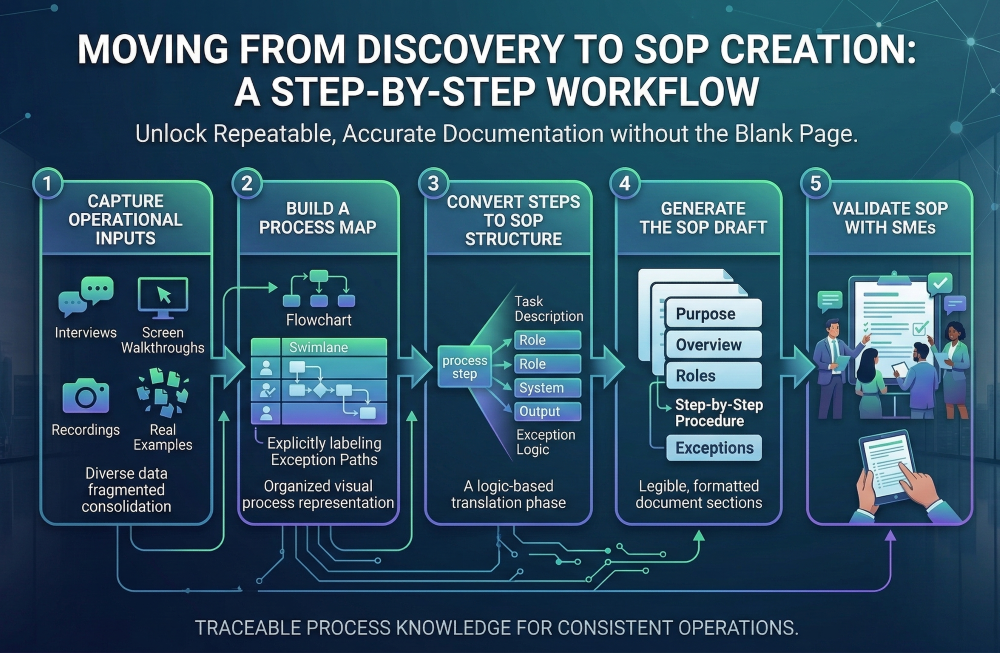
Modern organizations are solving this problem by generating SOPs directly from operational workflows rather than writing documentation from memory. This approach ensures procedures reflect how work actually happens and makes it easier to maintain governance over time.
The broader guide on AI-powered SOP creation explains how organizations can generate process documentation directly from operational discovery inputs.
In this article, we’ll examine what auditors actually look for in SOP documentation and how teams can structure procedures so they stand up to audit scrutiny.
Most organizations produce SOPs with good intentions. They want documentation that explains how processes work and helps employees perform tasks consistently.
But many SOPs fail audits because they focus on description rather than control.
Several common issues appear repeatedly during audit reviews.
Every controlled process needs a clear owner.
If an SOP describes a process but does not identify who is responsible for maintaining and enforcing it, auditors will flag this as a governance issue.
Ownership ensures accountability. Without it, documentation becomes informational rather than operational.
Auditors expect to see a history of document updates.
They want to understand:
If version history is missing, it becomes difficult to demonstrate that procedures are actively maintained.
One of the fastest ways for an SOP to fail an audit is when operational teams describe a workflow that differs from the documented procedure.
This mismatch often occurs when documentation is written from memory rather than from real operational workflows.
Over time, processes evolve while documentation remains static.
To create audit-ready SOPs, it helps to understand what auditors are trying to verify.
Their goal is not simply to review documentation. They want to confirm that operational processes are controlled and consistently executed.
Several elements are particularly important.
The procedure should clearly explain how work flows from start to finish.
Auditors want to understand the sequence of steps involved in the process and how those steps connect to each other.
Every step in the process should identify who is responsible for performing the task.
This ensures accountability and makes it possible to verify that tasks are executed by the appropriate role.
Processes typically include key decision points or approval steps.
These control points help ensure that important actions are verified before work continues.
Examples include approvals, validations, or reconciliations.
Auditors often ask how the organization verifies that a process actually occurs as documented.
This may include:
These artifacts demonstrate that the process is functioning as intended.
Finally, auditors expect to see documentation governance.
This includes:
These mechanisms ensure that SOPs remain accurate over time.
While SOP formats vary across organizations, most audit-ready procedures follow a similar structure.
This section explains why the procedure exists and what activities it covers.
Clearly defining scope helps prevent confusion about where the procedure applies.
A high-level summary describes the process and its objectives.
This section often includes a visual process map to help readers quickly understand the workflow.
Each role involved in the process should be clearly defined along with its responsibilities.
This ensures that ownership and accountability are visible.
The core of the SOP describes each operational step in the process.
These steps should include:
Clear step definitions help ensure consistency across teams.
Important decision points should be highlighted within the procedure.
These may include approvals, validations, reconciliations, or other control mechanisms.
Processes rarely follow a single path.
Audit-ready SOPs document how teams should handle exceptions or unusual situations.
References to policies, forms, templates, or system documentation help provide additional context.
One of the biggest reasons SOPs fail audits is that they were written without a deep understanding of the operational workflow.
Process discovery solves this problem.
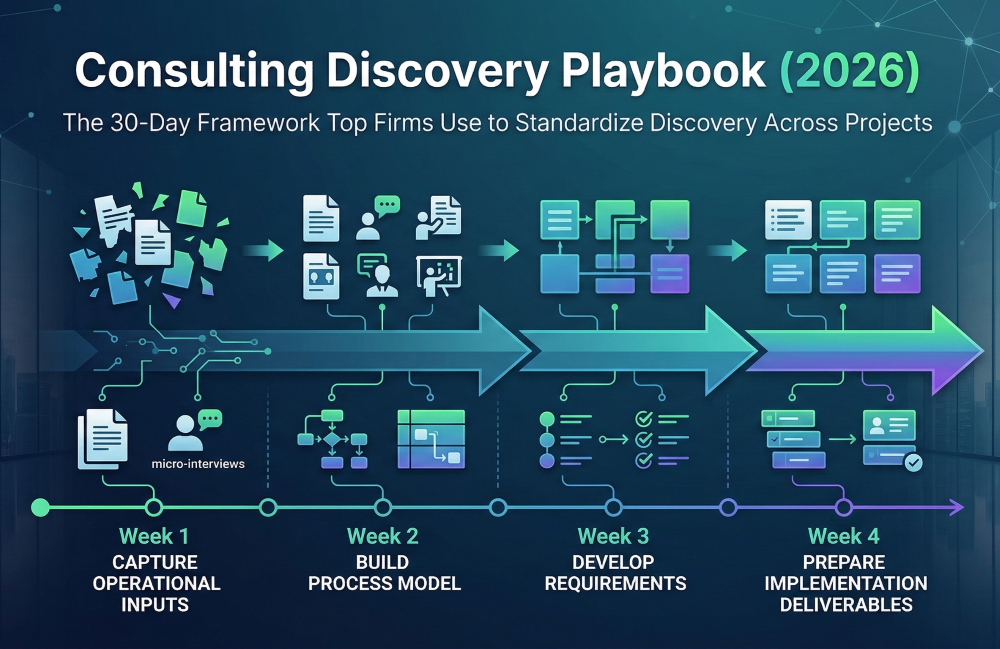
By gathering operational inputs such as SME interviews, system walkthroughs, and transaction examples, organizations can document procedures that accurately reflect real workflows.
This approach ensures that SOPs include the control points, exception paths, and responsibilities that auditors expect to see.
It also makes documentation easier to maintain because the procedures remain aligned with operational reality.
Maintaining SOPs manually can be challenging, especially in organizations where processes evolve frequently.
Automation tools can help organizations maintain audit-ready documentation by supporting several key activities.
These tools can help teams:
Platforms such as ClearWork support this type of workflow by capturing operational inputs, generating process documentation, and maintaining traceability between process discovery and SOPs.
https://www.clearwork.io/ai-sop-generator-process-documentation-software-clearwork
When documentation is connected directly to operational workflows, organizations can maintain more accurate procedures and respond to audits with greater confidence.
Even organizations with mature documentation programs sometimes encounter challenges.
Several mistakes appear frequently during audit reviews.
Policies describe rules, while procedures describe operational steps.
SOPs should focus on how work actually occurs.
Processes rarely operate exactly the same way every time.
Exception handling should be clearly documented to avoid confusion.
Processes evolve as systems change and organizations grow.
Documentation must be reviewed and updated regularly.
When documentation is created independently from real workflows, it becomes difficult to maintain accuracy.
An audit-ready SOP clearly defines the process workflow, identifies responsible roles, documents control points, and includes version history showing how the document has been maintained.
Auditors typically review process definitions, ownership, control mechanisms, evidence of execution, and governance over documentation updates.
Many organizations review SOPs annually or whenever significant process or system changes occur.
Supporting documentation may include system logs, approval records, transaction histories, and reports that demonstrate the process is being executed as documented.
Maintaining accurate SOPs requires structured governance, periodic reviews, and tools that help keep documentation aligned with operational workflows.
Many organizations create documentation that explains processes but fails to show how those processes are governed and maintained. When SOPs are generated from operational workflows and supported by strong documentation governance, organizations are far better prepared for compliance reviews and audits.
Enjoy our newsletter!