Most process excellence programs don’t fail because the team isn’t talented.
They fail because the organization is trying to improve work it can’t clearly see.
So the program becomes a cycle you’ve probably lived:
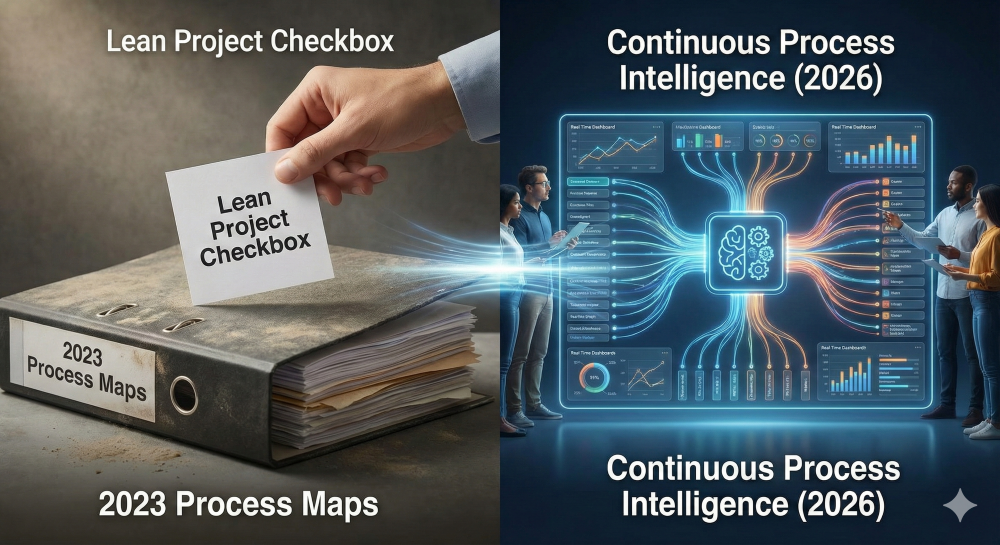
In 2026, the strongest process excellence teams are shifting from one-time mapping exercises to continuous process intelligence—a way to keep process visibility real, keep documentation current, and prioritize improvements based on what’s actually happening on the ground.
This pillar post lays out:
Process excellence is supposed to make work simpler, faster, cheaper, and more reliable.
So why do so many programs plateau?
Traditional discovery relies on memory and workshops. That produces a version of the process that’s:
Teams “agree” on a map… and then the work doesn’t follow it.
When leadership pushes “one best way,” frontline teams push back because they know the real work varies:
If you ignore variation, you get fake alignment and low adoption. If you embrace variation without structure, you get chaos.
A lot of improvement backlogs become idea lists:
But without a clear view of where time, rework, and friction live, prioritization becomes political.
Two common failure modes:
Teams celebrate “maps created,” “workshops completed,” and “SOPs published.”
But the business cares about:
If you don’t measure operational impact, process excellence becomes theater.
Modern process excellence isn’t a project. It’s an operating system.
The shift is simple:
Old model: document processes → propose improvements → hope adoption happens
New model: capture how work actually happens → improve continuously → keep documentation current automatically
This is where process intelligence matters. Not as a buzzword, but as the foundation for three outcomes every process excellence leader wants:
Here’s a model you can run in any organization—mid-market or enterprise—without creating a governance monster.
A useful process inventory includes:
This becomes your portfolio of work—not a static register.
Think of process excellence like product management for operations.
Intake: ideas come from frontline teams, leaders, audits, or performance signals
Triage: size it, score it, and decide if it’s real
Validate: confirm where the friction actually is (including variants/exceptions)
Deliver: fix the process, update artifacts, measure impact
Sustain: monitor drift and keep documentation current
The key is that improvements aren’t just implemented—they’re closed-looped with updated process maps, SOPs, requirements, and governance.
This is a big unlock:
Your goal is “structured flexibility”: consistent artifacts + clear decision rules + visible variation.
When documentation is manual, it’s always behind.
The modern approach is to generate:
…from the same discovery inputs, then validate quickly.
That’s how you turn documentation into something teams can maintain without burning out the SMEs.
Process excellence lives or dies on clarity of ownership.
You need three roles:
Process Owner (Accountable): owns outcomes and approves changes
Process Steward (Operational): maintains artifacts, cadence, and change workflow
SME Review Group (Consulted): validates changes, especially exceptions and controls
That’s it.
Set a cadence:
And define triggers that force review:
This turns process excellence into a living system instead of a documentation graveyard.
If your metrics don’t tie to real work outcomes, they’ll get ignored.
Here are the categories that matter in 2026:
The best programs connect improvement work directly to these metrics, then use them to prioritize what gets tackled next.
Most teams need a playbook that ships, not a methodology that looks good in a training deck.
Here’s a practical pipeline:
Start with one that is:
Define the boundaries clearly so you don’t get dragged into neighboring processes.
Focus on:
This is where most “current state” maps are wrong.
Your output bundle should include:
Score by:
Every improvement should end with:
This is how process excellence earns trust: not by producing artifacts, but by producing outcomes and keeping the system current.
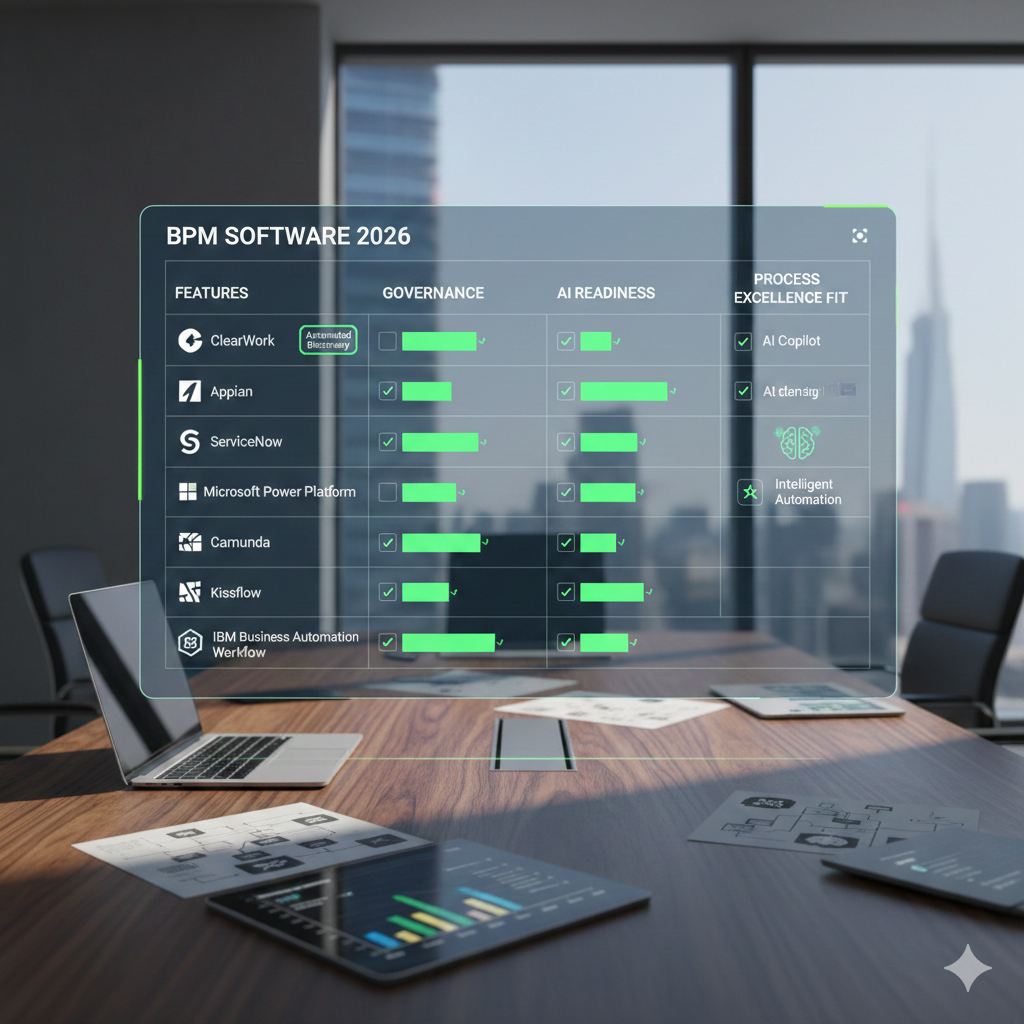
Whether you call it a process excellence platform, process documentation software, or business process management software, the capabilities that matter are shifting.
The big idea: process excellence shouldn’t be a separate “initiative.” It should be embedded into how work changes—every time.
If you want momentum without turning this into a six-month planning exercise:
The goal isn’t to “finish process excellence.” The goal is to make improvement continuous and measurable.
In 2026, process excellence is less about one-time Lean projects and more about continuous process intelligence—keeping process visibility real, improvements prioritized by evidence, and documentation current as work changes. The focus shifts from “mapping” to “running a system” that continuously improves operations.
They stall when visibility is based on perception (workshops), documentation drifts, governance is unclear, and success is measured by outputs (maps, workshops) instead of operational outcomes (cycle time, rework, escalations). Without a closed loop—improve, update artifacts, measure impact—momentum fades.
A lightweight model: a Process Owner (accountable), a Process Steward (operational), and an SME review group (consulted). Add a simple review cadence plus triggers tied to real change (system releases, KPI drift, policy updates) to prevent drift without slowing delivery.
Focus on cycle time, queue time at handoffs, throughput, first-time-right rate, rework and escalations, SLA adherence, and adoption indicators like workaround frequency. Tie improvements to measurable outcomes and report baseline vs post-change results.
Start with one high-volume or high-pain process, build a small documentation-and-improvement “bundle” (map + narrative + SOP + exceptions + backlog), deliver one measurable improvement within 30 days, then repeat. The credibility comes from outcomes—not from building a large program first.
If you are curious about the tools that modern process excellence teams are using to gain full visibility into their processes, identify challenges and opportunities for improvement check out ClearWork for Process Excellence teams: https://www.clearwork.io/process-excellence
Process excellence works best when it stops being a one-time initiative and becomes a living system that keeps process visibility real as work changes. ClearWork helps teams capture how work actually happens, generate the process maps and documentation that teams trust, and turn that into an improvement pipeline with measurable outcomes.
Enjoy our newsletter!