Business Process Mapping Tools for 2026: Best Software, AI Features, and How to Choose
Avery Brooks
December 31, 2025
Business process mapping is the practice of visually documenting how work gets done — steps, handoffs, decisions, exceptions, systems involved, and who owns what.
In practice, it's used to:
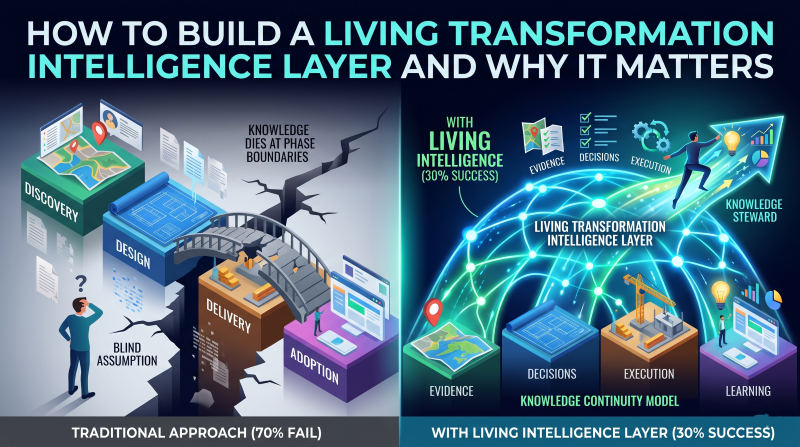
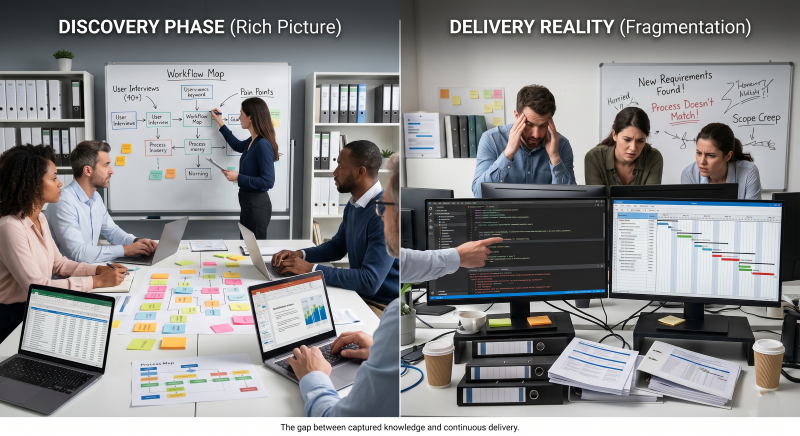
What it isn't: a one-time exercise. The teams that treat process mapping as a project deliverable — rather than a living operational asset — consistently find that their maps are outdated within weeks of the engagement ending.
That's the core problem the best business process mapping tools in 2026 are built to solve.
These terms get conflated constantly. Here's a practical distinction:
Process mapping (flowcharts, swimlanes): Best for clarity, alignment, and quick documentation. Accessible to non-technical stakeholders. Does not require formal notation.
Process modeling (typically BPMN):Best when you need a standardized notation that handles rules, events, exceptions, gateways, and deeper process analysis. Preferred when handing off to IT, system integrators, or automation teams.
BPM software / business process management software: Best when you need a governed repository — lifecycle management, ownership, versioning, standards, and a system of record for processes across the organization.
Understanding which of these you actually need is the fastest way to choose the right tool.
You don't need BPMN for every process map. But BPMN remains the common language when:
If your process maps will eventually generate requirements, user stories, test cases, controls, or automation logic, BPMN can significantly reduce ambiguity and rework downstream. The investment pays off when the stakes are high.
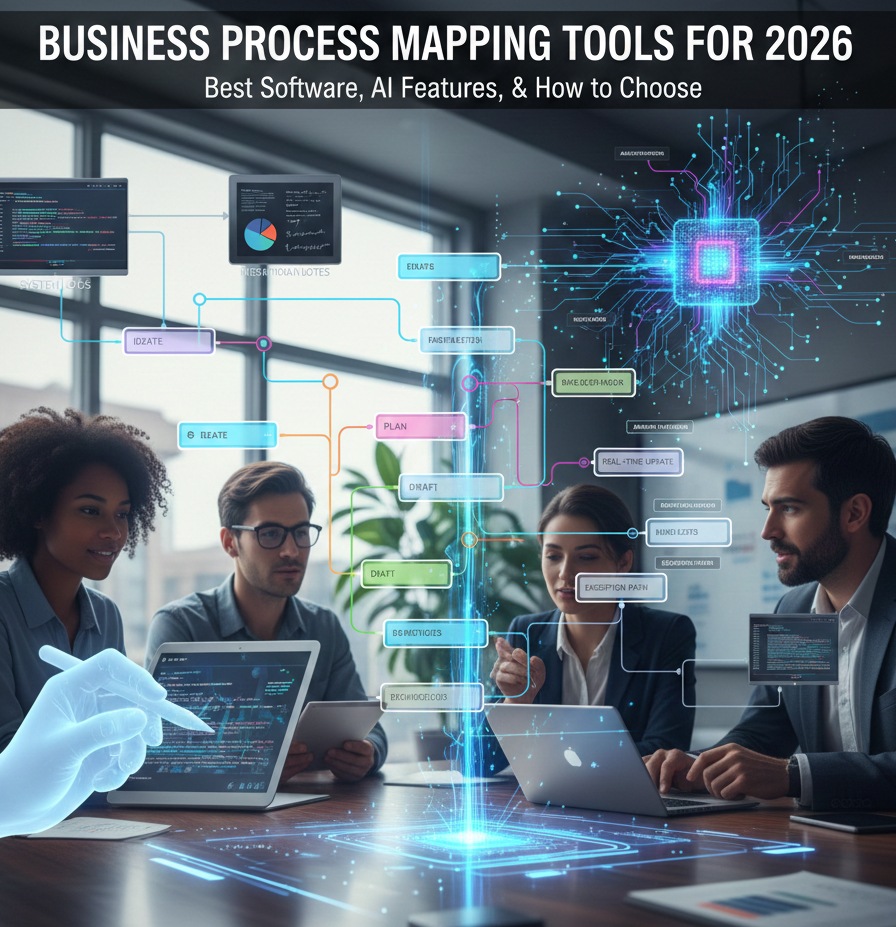
Text-to-diagram features are now standard across most process mapping tools. That's a genuine time-saver for drafting. But it introduces a new risk: speed without accuracy.
AI can help you create a first draft. It cannot validate that the process reflects actual operations unless it's grounded in real work signals — user activity, system events, or operational data. Fast and wrong is often worse than slow and right.
In 2026, "process mapping software" is expected to include real-time collaboration, commenting and approval workflows, version history, reusable templates, and permission controls. Tools that don't offer these are effectively building tools for one-off projects, not sustained operational programs.
This is the biggest shift in the category:
Process documentation is moving from static snapshots to continuously validated operational truth.
Teams are tired of:
Static maps fail because work changes. Teams move, systems change, workarounds proliferate. The best business process mapping tools in 2026 are the ones that help documentation stay aligned with reality — not just at go-live, but throughout the lifecycle of the program.
AI is reshaping business workflow analysis in three distinct ways — and it's worth separating them clearly, because they represent very different levels of maturity and value:
Most tools now offer AI features that generate flowcharts from prompts or text descriptions. This accelerates drafting and reduces blank-page friction. The output still reflects what someone described, not what actually happens.
A more advanced category: AI tools that capture how work actually happens by observing user activity, system events, and document patterns — then automatically construct process maps from that operational data. This is what separates process intelligence platforms from diagramming tools.
The difference matters enormously for transformation programs. Automatic process mapping based on real workflow data reveals:
The newest frontier: using AI workflow analysis outputs to ground AI agents. As organizations move toward deploying AI agents in operational roles, the agents need context — real process maps, exception logic, handoff patterns, and ownership data. Process intelligence platforms that produce machine-readable, structured outputs are becoming foundational infrastructure for AI agent deployments.
This is the direction the market is moving. Tools that only draw diagrams will become commodities. Tools that produce operational intelligence — and connect it to execution — are where the differentiation lives.
To keep this practical, we evaluated tools based on what teams actually need in 2026:
Below is a practical breakdown you can skim. For each tool: Overview → Best fit → Strengths → Trade-offs → When to choose it.
Overview: ClearWork represents the direction that business process mapping software is moving: documentation grounded in real work, not workshop summaries.
Rather than relying entirely on interviews and self-reported descriptions, ClearWork captures how work actually happens — from end users and existing documents — and turns that into trusted process maps, requirements, and living documentation. It's built for organizations that need accurate current-state documentation without the time and cost of traditional discovery programs.
Best fit:
Strengths:
Trade-offs:
When to choose it: When getting the process right matters more than drawing the process fast. Especially when your transformation, implementation, or AI initiative depends on having accurate process documentation before you build.
Overview: A strong enterprise platform for process modeling, governance, and standardization. Particularly common in SAP-centric organizations where process documentation ties directly to ERP initiative outcomes.
Best fit: Large organizations with mature governance needs and close process-to-ERP alignment.
Strengths: Strong modeling and repository capabilities; built for ownership, standards, and process lifecycle management; commonly aligned with enterprise transformation programs.
Trade-offs: Heavier implementation and adoption curve; can be more than teams need for lightweight mapping.
When to choose it: When you need a governed process system of record across a large enterprise — especially in SAP-heavy environments.
Overview: A long-standing enterprise-grade process architecture and modeling toolset used in organizations that treat process as a formal discipline.
Best fit: Organizations building an enterprise process architecture — not just documentation.
Strengths: Deep modeling and architecture capabilities; strong for enterprise consistency, formal analysis, and structural rigor.
Trade-offs: Complexity, training requirements, and operational overhead are significant. Not appropriate for teams that need speed-first mapping.
When to choose it: When your organization is committed to building a formal process architecture and has the resources to support adoption.
Overview: Designed for organizations that want modeling tied to improvement workflows and governance — not just one-time documentation.
Best fit: Process excellence programs connecting mapping to continuous improvement cycles.
Strengths: Strong governance foundation; modeling that connects to ongoing management and improvement programs.
Trade-offs: Can feel heavyweight for teams just starting out. More value when you commit to the platform model.
When to choose it: When you need mapping that feeds directly into structured improvement and governance cycles.
Overview: The default diagramming tool in many enterprises, particularly in organizations already deep in the Microsoft ecosystem.
Best fit: Teams that need quick diagrams, internal documentation, and familiar tooling without a new platform rollout.
Strengths: Widely adopted; low training friction; integrates naturally into Microsoft environments; good for basic flowcharts and swimlanes.
Trade-offs: Governance and single source of truth are difficult at scale. Version sprawl across shared drives is a well-documented problem.
When to choose it: When speed and familiarity matter and governance can be managed elsewhere.
Overview: A modern, collaborative diagramming tool used widely by distributed teams needing fast, structured process maps.
Best fit: Teams that need better collaboration than file-based tools, with real-time co-editing and strong template libraries.
Strengths: Real-time collaboration; clean commenting and review workflows; strong template library including BPMN and swimlane formats; easy sharing.
Trade-offs: Not a full process governance platform. Maps still require human effort to stay current.
When to choose it: When you want diagramming built for distributed teams and collaborative speed.
Overview: Miro is a whiteboarding and workshop platform — excellent for early-stage mapping and cross-functional alignment sessions.
Best fit: Early-stage discovery, brainstorming, stakeholder alignment, and facilitation-heavy workshops.
Strengths: Outstanding for visual collaboration; broad template library; great for "messy" early discovery work before structure is needed.
Trade-offs: Workshop outputs often don't become long-term governed assets. Not built for modeling rigor or process lifecycle management.
When to choose it: When your challenge is alignment and facilitation, not process governance.
Overview: A BPMN modeling tool with a low barrier to entry — useful for teams that want modeling rigor without a heavy enterprise platform.
Best fit: Business analysts and teams prioritizing BPMN quality and consistency.
Strengths: BPMN-first; useful for structured modeling without needing a full enterprise suite.
Trade-offs: Collaboration and governance aren't central. Still requires strong human discipline to maintain documentation currency.
When to choose it: When BPMN modeling quality is the primary goal and budget is a constraint.
Overview: Common in environments where process maps are part of a build pipeline — designing for automation and orchestration, not just documentation.
Best fit: Technical teams designing execution logic, decision models, and automation-ready process designs.
Strengths: Strong BPMN/DMN support where execution matters; excellent when process maps directly drive build work.
Trade-offs: Not designed for general business audiences or workshop-style discovery. Better for engineers than operations teams.
When to choose it: When your process maps are directly tied to orchestration and automation execution.
Overview: Focused on standardizing and managing process documentation across departments at scale.
Best fit: Organizations formalizing process ownership, documentation standards, and governance programs.
Strengths: Built for structured process documentation programs; useful for organization-wide standardization and ongoing governance.
Trade-offs: Can feel over-structured for teams that want mapping flexibility.
When to choose it: When the priority is organization-wide documentation standardization and governance maturity.
Overview: A cloud-based approach to process discovery and documentation with strong collaboration features.
Best fit: Teams wanting collaborative discovery with a more structured documentation framework than pure diagramming tools.
Strengths: Strong for collaborative discovery; useful for documenting processes in a more structured way than whiteboard tools.
Trade-offs: Not always the fastest for lightweight teams; full value requires consistent adoption.
When to choose it: When you need collaborative discovery paired with a structured documentation system.
Overview: A widely used free workflow diagram tool — particularly popular in Atlassian environments.
Best fit: Individuals and small teams needing free, flexible diagrams without platform overhead.
Strengths: Free; flexible; works well paired with Confluence or Google Drive; good for basic process documentation.
Trade-offs: Governance and lifecycle management entirely depend on external discipline and storage choices.
When to choose it: When budget or simplicity is the overriding priority.
Most teams will start with a prompt, meeting notes, or an SOP — and generate a first-draft process map in seconds. The competitive differentiation moves from "can you generate a map?" to "how accurate and actionable is that map?"
Process maps in 2026 are becoming queryable assets, not static pictures. Leading platforms allow you to attach metadata — owners, systems, risks and controls, KPIs, volumes, exception types — and query across them. This is where repositories and AI-powered platforms outperform static diagramming tools.
Process ownership, approval workflows, and documentation standards are showing up earlier in transformation programs — not after the fact. Organizations under pressure to reduce rework are requiring governance before a map is ever called "current state."
The value is no longer just the diagram. The value is what you can generate from it: requirements and user stories, test scenarios, automation candidates, AI agent guardrails, controls, and compliance checkpoints. Business process mapping tools that help you move from map → structured deliverables are winning.
As AI agent deployments accelerate, organizations are discovering that agents fail without operational context. Real process maps — with accurate exception logic, handoff patterns, system touchpoints, and variation data — are becoming foundational requirements for AI agent grounding. Process intelligence platforms that produce machine-readable, structured process data are positioned at the center of this trend.
Static maps go stale. In transformation programs that span 6 to 18 months, the current state documented in month one is often meaningfully wrong by month four. The best business workflow analysis and mapping approaches in 2026 are those that help documentation stay continuously aligned with operational reality — reducing rework, improving requirements accuracy, and maintaining trust in the documentation throughout the program.
If your priority is workshop alignment and early-stage brainstorming:→ Miro (or Lucidchart for more structured diagramming)
If your priority is collaborative diagramming and basic documentation:→ Lucidchart (or Visio if you're Microsoft-first)
If your priority is BPMN rigor and modeling standards:→ Bizagi Modeler, Camunda Modeler, or enterprise platforms like Signavio or ARIS depending on scale
If your priority is enterprise governance and a process system of record:→ Signavio, ARIS, Nintex, or IBM Blueworks Live
If your priority is accuracy + speed + documentation that doesn't go stale:→ Automatic process mapping and process intelligence (ClearWork), especially for transformation programs and AI readiness initiatives
If your priority is AI agent readiness and machine-readable process context:→ ClearWork — built specifically to produce the structured operational context that agents need to function reliably
Ask these questions before you commit:
For free diagramming, diagrams.net (draw.io) is the most widely used starting point. For BPMN-first modeling without a large platform investment, Bizagi Modeler is a strong free option. The consistent trade-off with free tools is governance and lifecycle management — you get the drawing capability but not the system of record.
Yes — especially in Microsoft-heavy environments where familiarity and ecosystem fit matter. The main limitation remains governance at scale: without a deliberate repository approach, Visio maps tend to proliferate across shared drives in conflicting versions. For standalone documentation and quick diagramming, it still works well.
Process mapping software is primarily focused on creating visual diagrams. Business process management software typically includes a governed repository, ownership workflows, lifecycle management, standards enforcement, and often execution or automation capabilities. As the category matures, the line between them is blurring — especially for platforms that add AI workflow analysis, automatic process discovery, and agent-readiness features.
Process mapping is typically human-led — it relies on interviews, workshops, and documents to construct a picture of how work happens. Process mining analyzes event log data from systems (like SAP or ServiceNow) to reconstruct process flows from actual transaction records. Process intelligence platforms like ClearWork occupy a middle ground: capturing real user activity and document signals to produce accurate, evidence-based process maps without requiring full event log infrastructure.
Only if you need standardization, rigor, and alignment across business and IT teams — or if your maps will become automation-ready designs or integration specifications. For documentation, alignment, and operational clarity, swimlanes and flowcharts are usually sufficient. The decision point: if your maps will generate requirements or drive a build, BPMN reduces ambiguity significantly.
Two things solve this: governance (formal ownership and a scheduled review cadence) and grounding documentation in operational reality rather than self-reported descriptions. Maps that reflect what people said in a workshop tend to drift quickly. Maps that capture how work actually happens — and are connected to the systems and people involved — stay accurate longer. For long transformation programs, that distinction is often the difference between a successful go-live and a costly rework cycle.
AI is changing workflow analysis at three levels. First, AI-assisted diagramming — generating maps from prompts or notes — is now standard and speeds up drafting. Second, automatic process mapping uses AI to capture real user activity and build process maps from operational data rather than interviews, revealing variants and exceptions that manual discovery misses. Third, AI workflow analysis is becoming foundational for AI agent deployments: organizations need accurate, structured process data to define agent scope, guardrails, and handoff logic. The teams investing in process intelligence now are the ones that will be able to deploy AI agents reliably.
If your goal is quick stakeholder alignment, collaborative diagramming tools are excellent. If your goal is rigorous modeling, BPMN-focused tools and enterprise repositories deliver real value. But if your goal is to reduce rework, accelerate transformation, and build on accurate operational understanding — the biggest advantage in 2026 is process documentation that stays aligned with reality.
That's why automatic process mapping, grounded in process intelligence, keeps emerging as the logical next step once teams outgrow static diagrams. It's not about drawing faster. It's about finally knowing what's actually happening before you build.
Explore how ClearWork's automated discovery platform maps how work actually happens — from end users and existing documents — and turns it into trusted process maps, requirements, and living documentation: https://www.clearwork.io/
The old static way of mapping processes through manual workshops, manual diagramming and review is a thing of the past. Take a look at how 2026 brings new innovation to the world of process mapping, process improvement and transformation.