For operational excellence and internal transformation teams

Business Process Mapping for Transformation Teams

ClearWork helps operational excellence, internal transformation, PMO, and process improvement teams capture how work actually happens across people, systems, documents, and meetings — then turn that knowledge into trusted business process maps, swimlane diagrams, SOPs, requirements, KPIs, and living documentation.

Instead of relying on static workshops, outdated SOP templates, or disconnected process mapping tools, ClearWork gives your team a living source of truth for understanding, improving, and governing the way work gets done.

Map real workflows Capture current-state work from docs, meetings, interviews, and screen walkthroughs.
Generate outputs Create process maps, swimlane diagrams, SOPs, requirements, and improvement plans.
Trace the evidence Connect outputs back to the source knowledge that created them.
Keep it current Use ownership, review cycles, versioning, and governance to prevent drift.
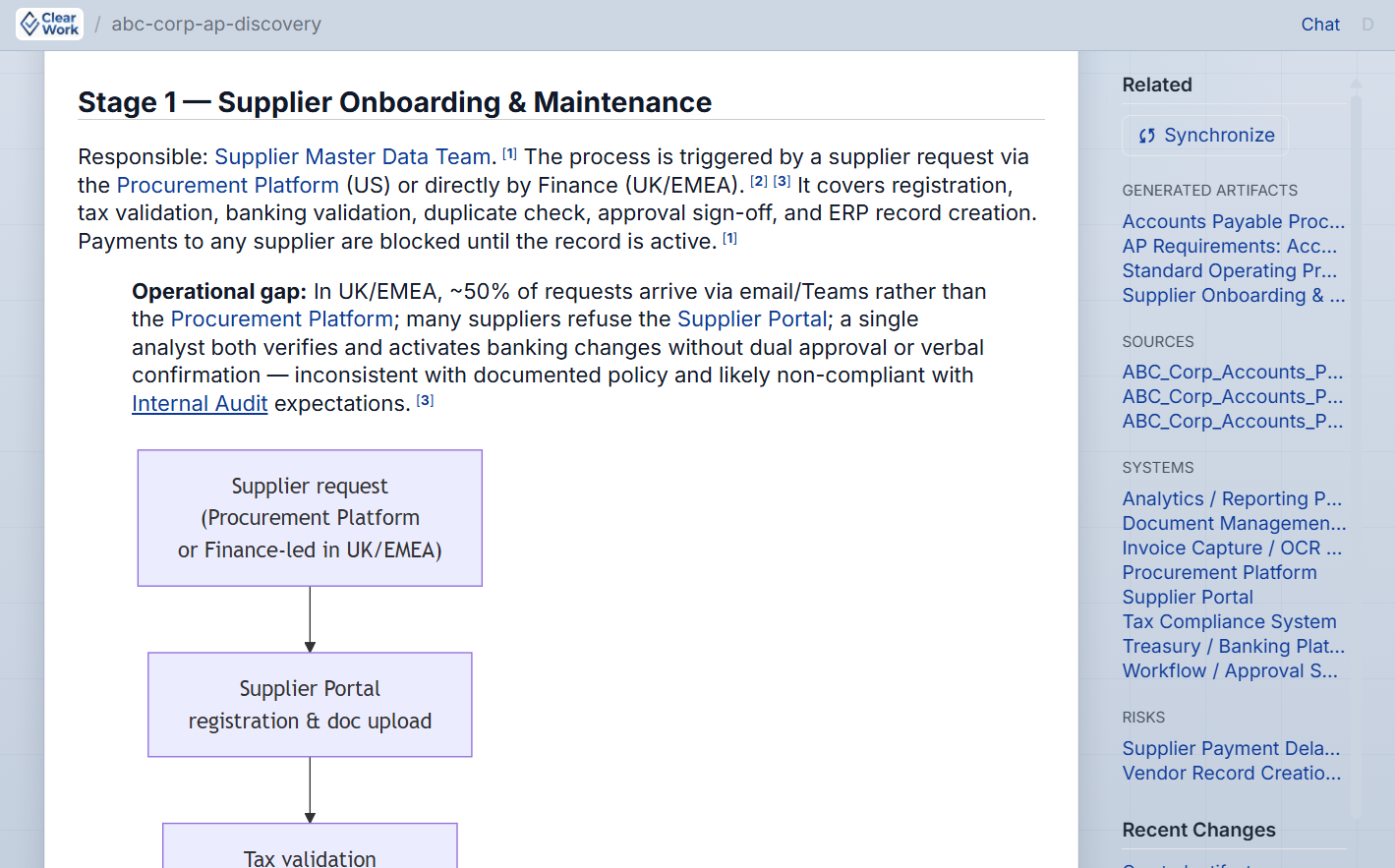
ClearWork centralized intelligence view showing processes, systems, stakeholders, and operational knowledge
Why process mapping breaks

Business process mapping breaks down when it only captures the happy path

Most internal transformation teams already have process documentation somewhere. The problem is not that teams lack process artifacts. The problem is that those artifacts rarely reflect how work actually happens.

01

Workshops miss operating detail

Live workshops are useful, but they usually capture what people remember in the moment. They tend to focus on the expected process, not the full reality of handoffs, exceptions, and workarounds.

02

SOPs become outdated

Most SOPs are created as static documents. Once the process changes, the SOP template, process map, training guide, and requirements document all begin to drift away from reality.

03

Process maps lose context

A flowchart or swimlane diagram may show the steps, but it often fails to explain why the step exists, who owns it, what system is used, and what exceptions occur.

04

Knowledge gets rediscovered

Every transformation, automation, ERP, CRM, or continuous improvement initiative starts by asking the same questions again because prior discovery never became living organizational knowledge.

05

Improvement starts without a baseline

When business process mapping is incomplete, internal teams make decisions based on assumptions. That creates weak requirements, unclear ownership, poor adoption, and rework.

06

Automation moves too early

AI and automation initiatives become risky when teams automate assumed processes instead of actual operating behavior, exceptions, approvals, and human judgment.

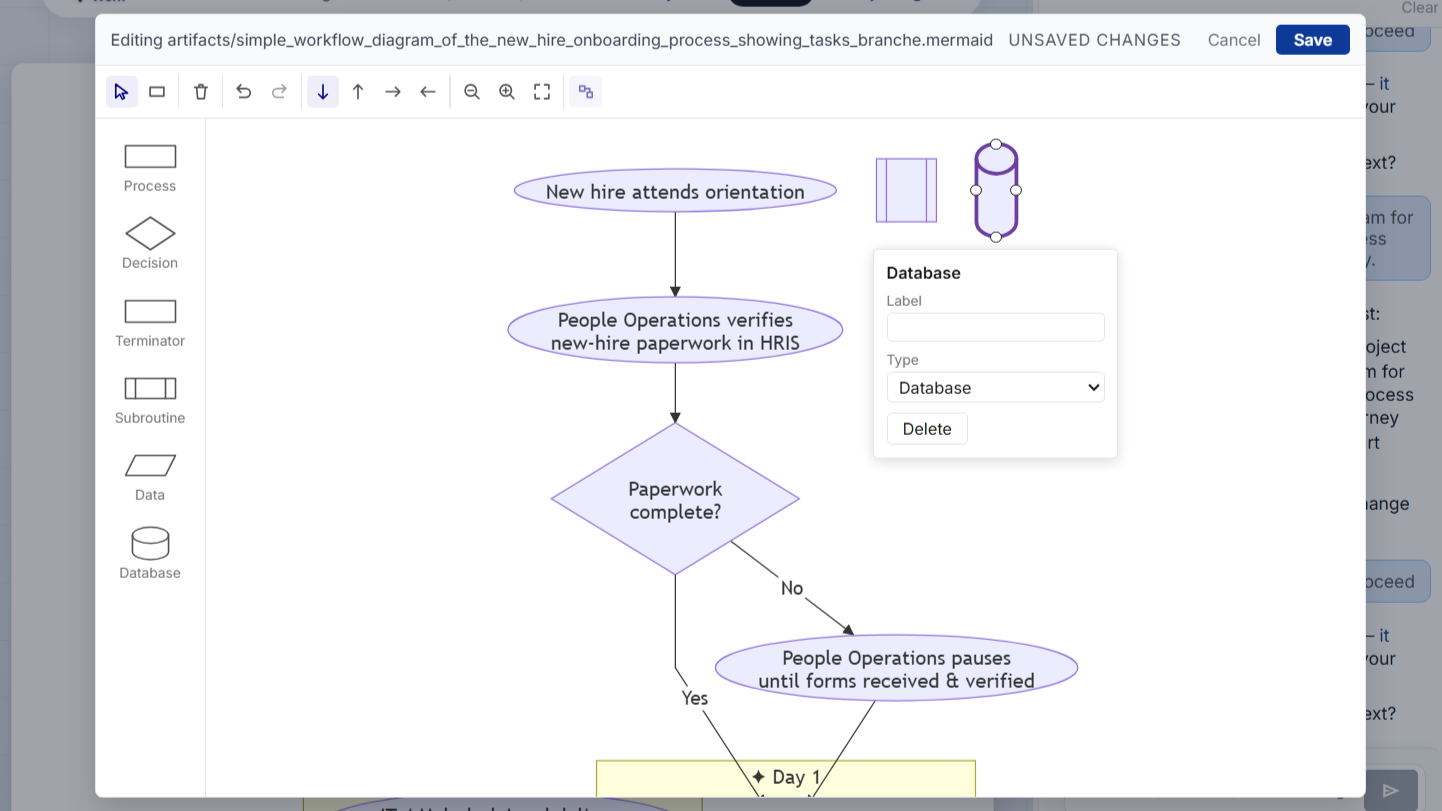
ClearWork Process Map Automation Preview
automatically generate process maps, diagrams and artifacts with natural language
ClearWork Complete Version Control and Approvals
ClearWork automatically updates your artifacts with complete version control and human approval based on new knowledge coming in
The operational loop

How business process mapping becomes trusted operational intelligence for every transformation initiative.

Internal process materials and employee interviews flow in. The living operational knowledge base updates as teams add context, process owners validate each change, and OpEx deliverables generate from validated truth — then stay in sync as operations evolve.

Capture operational knowledge Everything about how work happens flows in.
MIC

AI-led employee interviews

Async voice, structured Q&A, screen+narration walkthroughs

DOC

Internal process materials

SOPs, policies, process maps, spreadsheets, training guides, diagrams

REC

Live session capture

Transcripts, recordings, meeting bots, workshop notes

ACT

Transformation activity

Decisions, risks, requirements, controls, approvals, improvement requests

Living operational knowledge base

A continuously updated source of truth for the operating model — validated, traceable, and ready to turn into process standards and transformation outputs.

self-creating wiki
Operating Context
Current State
Processes
Requirements
Systems
Process Owners
Decisions
Risks & Gaps
Generate OpEx deliverables Every output linked to validated operational evidence.
MAP

Business process maps & swimlanes

Role-based flows, handoffs, exceptions, approvals, decision points

REQ

Requirements & improvement backlogs

Business requirements, user stories, fit-gap inputs, open questions

SOP

SOPs & work instructions

Standard operating procedures, training guides, role-based documentation

KPIs, controls & governance packs

Metrics, ownership, review cycles, controls, executive summaries

Product workflow

Map, improve, and govern business processes without rebuilding from scratch

ClearWork helps internal teams move from scattered context to governed process documentation through a repeatable workflow: start with what exists, generate a discovery plan, collect what is missing, create usable outputs, validate with evidence, and keep everything current.

1

Start with the process knowledge you already have

Upload SOPs, policies, training guides, process maps, swimlane diagrams, meeting notes, workshop outputs, spreadsheets, recordings, transcripts, requirements documents, and transformation plans.

  • Create a first operating baseline from existing materials
  • Identify what is known, outdated, conflicting, or missing
  • Turn messy process content into structured discovery inputs
ClearWork project setup screen where users input project details and upload documents
Project setup and document intake
2

Generate a discovery plan that exposes gaps early

ClearWork reviews the operating context and identifies missing process owners, conflicting procedures, untested SOPs, ambiguous requirements, and topics that need deeper validation.

  • Create interview topics and follow-ups by process area
  • Assign discovery to the right stakeholders
  • Find gaps before they become transformation assumptions
ClearWork generated discovery plan with topics, gaps, and asynchronous interview assignments
Discovery plan and gap detection
3

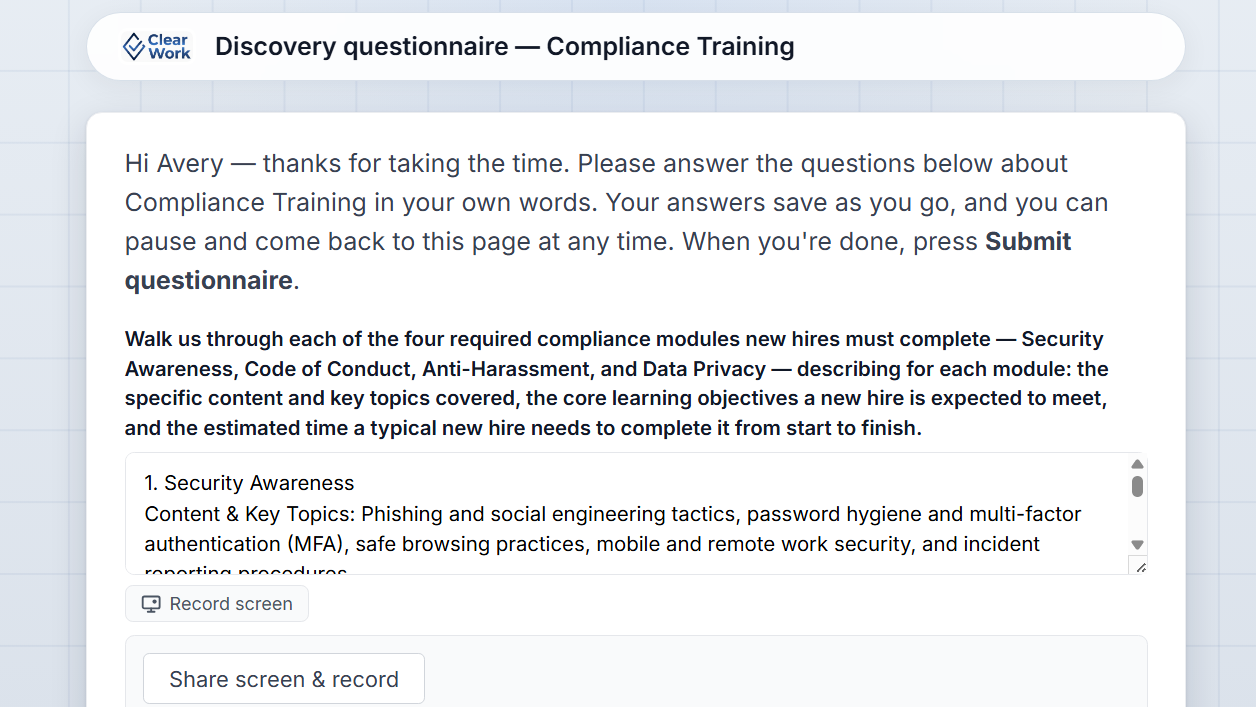
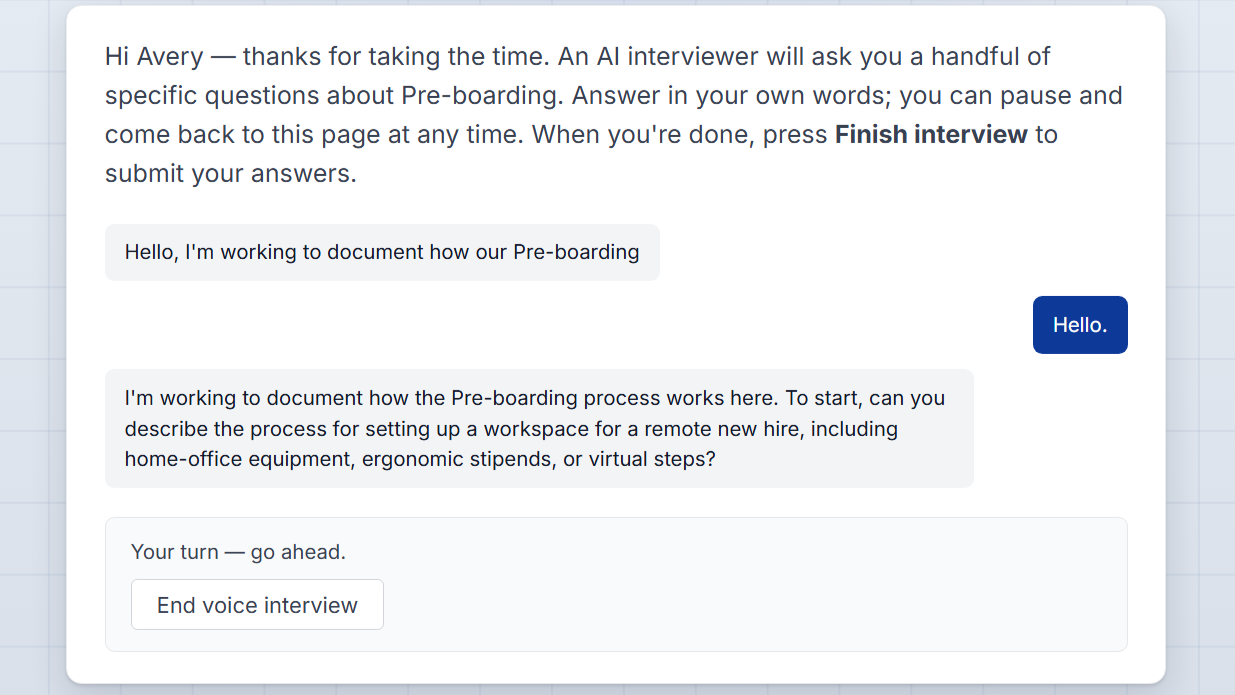
Fill the gaps with asynchronous AI interviews

Send secure AI-led interview links to process owners, SMEs, frontline users, managers, and regional teams. Stakeholders can respond through text, voice, guided AI conversations, structured questions, screen walkthroughs, and document uploads.

  • Augment live discovery sessions without replacing them
  • Reach employees across locations, shifts, and time zones
  • Capture exceptions and workarounds that rarely surface in workshops
ClearWork asynchronous discovery interviews assigned to subject matter experts
Async AI interviews by email link
4

Generate business process maps, SOPs, requirements, and KPIs

A business process map is useful, but internal teams need more than a diagram. ClearWork helps generate the operating artifacts your team would otherwise build manually.

  • Create process maps, swimlane diagrams, SOPs, and work instructions
  • Generate requirements, user stories, risks, and improvement backlogs
  • Produce KPI definitions, ownership models, and executive summaries
ClearWork screen showing deliverable generation using natural language
Natural-language deliverable generation
Who it is for

Give every transformation team a clearer view of how work actually happens

ClearWork is designed for internal teams responsible for understanding, standardizing, improving, and governing work across the organization.

OE

Operational excellence teams

Map current-state processes, identify waste, standardize work, capture exceptions, and turn improvement opportunities into governed action plans.

TX

Internal transformation teams

Build a trusted understanding of how work happens before redesigning operating models, deploying new systems, or launching major change initiatives.

PM

PMO and program teams

Connect discovery, requirements, risks, decisions, KPIs, documentation, and stakeholder feedback across transformation programs.

SS

Shared services teams

Compare workflows across teams, locations, and business units so you can standardize processes without ignoring local variation.

PO

Process owners

Maintain living SOPs, process maps, controls, training materials, and performance metrics for the processes you own.

AI

AI and automation leaders

Identify which processes are ready for automation, which workflows need redesign first, and where exceptions or human review still matter.

Use cases

Use ClearWork anywhere business process mapping needs more than a diagram

Internal transformation work rarely follows a clean sequence. ClearWork keeps the relationships between processes, people, systems, documents, requirements, risks, KPIs, and decisions connected.

ERP & CRM readiness

Understand current-state workflows before configuration decisions are made

Capture system handoffs, exceptions, manual workarounds, approval paths, and business requirements before implementation begins.

Shared services

Standardize similar work without ignoring local variation

Compare process variations, identify common patterns, document exceptions, and create a clearer path toward shared service models.

Continuous improvement

Turn discovery into a repeatable improvement engine

Identify bottlenecks, waste, rework, delays, and improvement opportunities, then connect them to owners, KPIs, and follow-up actions.

SOP modernization

Move beyond static SOP templates

Convert legacy documentation into living SOPs grounded in real process knowledge from documents, interviews, meetings, and walkthroughs.

Compliance & controls

Document approvals, evidence, ownership, and risk

Capture control points, decision logic, accountability, and required evidence in a way that can be reviewed and maintained over time.

AI & automation readiness

Know what should be automated before building

Identify where automation makes sense, where process redesign is needed first, and where human judgment or exceptions remain critical.

Operating artifacts

The process outputs your team usually builds manually

ClearWork helps internal teams generate the core artifacts needed to understand, improve, and govern business processes from the same underlying source of operational knowledge.

MAP

Business process maps

Create clear views of how work moves from start to finish, including process steps, decisions, systems, inputs, outputs, and handoffs.

LANE

Swimlane diagrams

Generate swimlane diagrams that show responsibilities across roles, teams, departments, systems, or business units.

SOP

SOPs and work instructions

Turn process knowledge into structured SOPs, work instructions, help guides, and role-based documentation without starting from a blank SOP template.

REQ

Requirements and user stories

Convert process discovery into business requirements, system requirements, epics, user stories, tasks, and implementation-ready documentation.

KPI

KPI definitions

Identify meaningful KPIs connected to cycle time, rework, handoff delays, approval time, exception volume, and adoption metrics.

RISK

Risks, decisions, and gaps

Track what is unknown, unresolved, risky, or dependent on stakeholder decisions before it creates downstream rework.

DOC

Current-state and future-state docs

Capture how the process works today, then define how it should change based on gaps, risks, bottlenecks, and improvement opportunities.

EXEC

Executive summaries

Create leadership-ready summaries that explain the current state, key findings, process gaps, improvement opportunities, and next steps.

Why ClearWork is different

A better alternative to static SOP templates and disconnected process mapping tools

SOP templates and traditional process mapping tools can help teams document work. ClearWork helps solve the harder problem: keeping process knowledge accurate, connected, and useful after the initial document is created.

Capability
Traditional approach
ClearWork approach
Starting point
Blank templates, manual workshops, scattered notes, and existing documents that may be incomplete.
Existing SOPs, process maps, notes, recordings, interviews, and walkthroughs become structured source knowledge.
Process mapping
A person manually translates interviews and notes into a static process map or swimlane diagram.
ClearWork helps generate maps and diagrams from the underlying operating context it collects.
Context
Diagrams often lose the why behind steps, decisions, systems, exceptions, and ownership.
Processes stay connected to requirements, SOPs, KPIs, decisions, risks, gaps, and source evidence.
Maintenance
Documentation gets stale because updates depend on manual document audits and scattered comments.
ClearWork helps flag artifacts that may need review when source knowledge changes.
Governance
Shared drives make ownership, approval, review cadence, and version history hard to manage.
Governed workspaces support ownership, review cycles, approved updates, and living process documentation.
Continuous improvement that compounds

Business process mapping that becomes more valuable over time

Operational excellence teams do not need another static deliverable. They need a way to build process understanding that improves over time.

Faster baseline Reduce the time it takes to understand processes across teams, functions, systems, and regions.
Better requirements Generate requirements from real workflows, exceptions, approvals, systems, and user needs.
Less rework Avoid redesigning processes, SOPs, requirements, and training materials every time new information appears.

Stronger standardization

Identify where processes should be standardized and where legitimate variation needs to remain.

Better adoption

Design change around how employees actually work, not just how leadership assumes the process works.

Improved governance

Assign ownership, schedule reviews, collect feedback, approve updates, and maintain a clear history of process changes.

Example workflow

From messy process knowledge to governed process documentation

ClearWork helps internal teams turn scattered inputs into a trusted operating record that can be reviewed, used, and kept current.

Before ClearWork

A process improvement initiative starts from scattered context

The team collects old SOPs, partial process maps, workshop notes, and stakeholder input. After several weeks, they still have conflicting details, undocumented workarounds, regional variation, unclear ownership, and no reliable source of truth.

× Dated SOP template
× Partial process map
× Conflicting stakeholder notes
× Undocumented workarounds
× No reliable governance loop
With ClearWork

The same work becomes a governed process record

The team uploads existing materials, assigns AI-led interviews, validates source evidence, and generates the operating artifacts needed for improvement, standardization, and transformation planning.

Current-state business process map
Swimlane diagram by role and system
Structured SOP and exception list
Business requirements, risks, and KPIs
Owner-approved documentation with review cycles
Trust and governance

Governed process documentation your teams can trust

For internal transformation teams, accuracy matters. ClearWork is designed to help teams create process documentation that can be reviewed, challenged, updated, and trusted.

SRC

Source-linked outputs

Process maps, SOPs, requirements, and recommendations can be connected back to the source knowledge that informed them.

REV

Human review

AI can generate drafts and suggest updates, but your team controls what becomes approved process documentation.

VER

Version history

Track how process artifacts change over time, including what changed, when it changed, and who reviewed it.

OWN

Ownership and review cycles

Assign process owners, reviewers, and stakeholders so documentation does not become orphaned.

FAQ

Frequently asked questions about business process mapping with ClearWork

Practical answers for operational excellence, internal transformation, PMO, and process improvement teams evaluating ClearWork.

What is business process mapping?
Business process mapping is the practice of documenting how work moves through an organization, including process steps, roles, systems, decisions, handoffs, inputs, outputs, and exceptions. ClearWork helps teams make business process mapping more complete by capturing information from documents, meetings, interviews, recordings, and employee input — then turning that knowledge into maps, swimlane diagrams, SOPs, requirements, and improvement plans.
How is ClearWork different from traditional process mapping software?
Traditional process mapping software usually helps teams draw diagrams. ClearWork helps teams collect the operational knowledge behind the diagram, generate multiple process artifacts from that knowledge, connect outputs to source evidence, and govern updates over time.
Can ClearWork generate a swimlane diagram?
Yes. ClearWork can help generate swimlane diagrams that show how work moves across roles, teams, departments, systems, or business units. Because ClearWork captures the context behind the workflow, the diagram can reflect handoffs, approvals, exceptions, system usage, and ownership more clearly than a manually drawn diagram based only on workshop notes.
Can ClearWork replace our SOP template?
ClearWork can help your team move beyond static SOP templates by generating SOP drafts from actual process knowledge. You can still use your preferred SOP format, structure, and approval process. The difference is that ClearWork helps populate and maintain the SOP using source knowledge from documents, interviews, meetings, recordings, and stakeholder input.
Is ClearWork only for operational excellence teams?
No. ClearWork is useful for operational excellence teams, internal transformation teams, PMOs, shared services teams, process owners, business analysts, change leaders, and teams preparing for ERP, CRM, AI, automation, or operating model changes.
Does ClearWork replace live workshops?
No. ClearWork augments live discovery sessions. Your team can still run workshops and stakeholder meetings. ClearWork helps expand discovery by collecting asynchronous input, identifying gaps, organizing findings, generating artifacts, and keeping documentation current after the workshop ends.
What process artifacts can ClearWork generate?
ClearWork can help generate business process maps, swimlane diagrams, SOPs, work instructions, current-state narratives, future-state recommendations, requirements, user stories, KPI definitions, risks, decisions, open questions, improvement backlogs, and executive summaries.
How does ClearWork keep process documentation current?
ClearWork helps connect process documentation to the knowledge that created it. When source knowledge changes, teams can review related artifacts, approve updates, and maintain version history. This helps prevent SOPs, process maps, and requirements from becoming stale after the initial business process mapping effort is complete.
Bring us one messy process

We’ll show you what ClearWork can turn it into

Your team does not need another static process map, outdated SOP template, or disconnected documentation repository. ClearWork helps internal transformation and operational excellence teams capture how work actually happens, generate trusted business process maps and operating artifacts, and keep process knowledge governed over time.

Start with one complex workflow, one outdated SOP, or one upcoming transformation initiative.