How Process Discovery Tools Transform & Safeguard Salesforce Projects
Salesforce transformations rarely fail because someone configured the wrong field.
They fail because teams built Salesforce around an assumed process—and only discovered the real process during adoption, QA, or UAT.
You’ve seen the pattern:
- “We implemented the new stages… but reps still work out of spreadsheets.”
- “We redesigned case routing… but escalations still happen in Slack.”
- “We launched CPQ… but approvals and exceptions still live in email.”
- “Dashboards look clean… but the data isn’t trusted.”
In 2026, process excellence leaders and Salesforce program owners are aligning around a new standard:
If you can’t capture how work actually happens across systems, channels, roles, variants, and exceptions—you can’t design Salesforce to drive outcomes.
This guide explains the best process discovery approaches for Salesforce transformations, how to choose the right tool category, and how to build a discovery “stack” that reduces rework and accelerates delivery.
If you want the broader view across all categories and vendors, this article is part of a spoke series linked to the pillar post here:
https://www.clearwork.io/blog-posts/best-process-discovery-tools-for-2026-automated-discovery-process-mining-and-task-mining-compared
Why Salesforce discovery is uniquely hard (and why workshops aren’t enough)
Salesforce is often described as “the system of record.” In practice, it’s more like the system of partial record.
The real process spans channels and tools Salesforce doesn’t fully capture:
- discovery and negotiation in email, calls, Slack/Teams
- approvals and deal desk work outside the CRM
- handoffs between Sales → CS → Finance → Support
- exception handling that happens in human workflows
- regional and segment-based variants that change the “standard” motion
Workshops do two things well: alignment and intent.
They do one thing poorly: reveal operational truth at scale.
That’s why many Salesforce programs end up with:
- low adoption (“this isn’t how we work”)
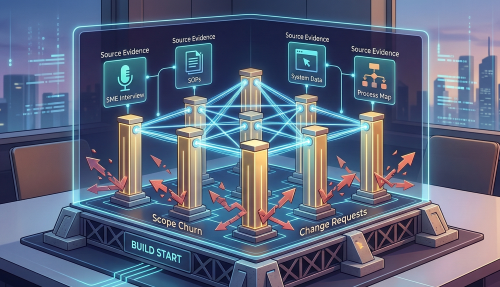
- endless backlog churn (“we forgot this edge case”)
- rework during UAT (“the process doesn’t match reality”)
- analytics issues (“the dashboard is wrong because the inputs are wrong”)
What “process discovery” means in a Salesforce environment
“Process discovery tools” is a broad label. For Salesforce transformations, there are three distinct approaches—with different strengths.
1) Process mining (Salesforce system truth)
Process mining uses event data to reconstruct what happened and how long it took. In a Salesforce context, this means discovering flows using CRM event signals, object history, and related system data.
Best for:
- identifying paths users follow inside Salesforce
- quantifying bottlenecks (stage duration, routing delays, queue wait time)
- spotting measurable variance across teams and territories
Common limitation:
Salesforce records outcomes and timestamps, but it doesn’t reliably capture:
- what happened in Slack/email/calls before the update
- why approvals took time
- how exception handling really works
In other words: process mining can tell you “what happened in the CRM,” not always “how the business actually operated.”
2) Task mining / task capture (Salesforce human truth)
Task mining captures how work is executed across tools—often the steps that surround Salesforce:
- looking up pricing/terms
- assembling approvals
- copying data between tools
- building quotes, docs, and follow-ups
- resolving exceptions that never cleanly land in Salesforce
Best for:
- understanding the manual work and swivel-chair steps that drive cycle time
- exposing the shadow process behind pipeline and case resolution
Common limitation:
Task-level detail is powerful, but it needs structure to translate into a clean end-to-end process model and delivery-ready requirements.
3) Automated Process Discovery (the 2026 shift)
Automated Process Discovery uses AI to bring tribal knowledge out of people’s heads and turn it into structured documentation and project-ready deliverables—powering the planning and discovery phases of a Salesforce transformation.
In Salesforce terms, this means:
- scaling discovery beyond a handful of “top performers” and admins
- capturing variants by segment, territory, deal size, or product line
- surfacing exceptions early (approvals, escalations, renewals, data gaps)
- producing deliverables that drive delivery: scope, requirements, epics/stories, acceptance criteria, and governance
If your biggest risk is adoption failure and requirements churn—not just “insight dashboards”—this category is becoming the foundation for modern CRM transformation.
What’s changing in 2026 (and why tool selection looks different now)
Trend 1: Salesforce is pushing harder into process intelligence
Salesforce has made process mining more central to its narrative—especially as AI and agents become more prominent and need better grounding in real operations.
Trend 2: CRM modernization is really operating model modernization
Most “Salesforce transformations” are actually transformations of:
- qualification standards
- deal governance
- handoffs and ownership rules
- service triage and escalation models
- enablement and accountability
That requires discovery that captures humans, not just objects.
Trend 3: Hybrid discovery is becoming the default
Leading teams blend:
- CRM/system truth (what’s recorded)
- human truth (how work is done)
- delivery truth (what gets built and tested)
Because no single data source explains reality.
Trend 4: Speed to value is now non-negotiable
Teams want discovery outputs early—before a backlog is locked and design debates become political.
Trend 5: Deliverables matter more than diagrams
The highest-performing Salesforce programs judge discovery by whether it produces:
- a scope that holds
- requirements that cover variants
- UAT that validates instead of discovers
- adoption that sticks
Quick picks: best process discovery approaches for Salesforce transformations (by outcome)
If you’re shortlisting quickly, here’s the most practical way to frame it:
- Best overall for planning + delivery-ready discovery outputs: ClearWork Automated Process Discovery
- Best for system-driven visibility and measurable CRM paths: a Salesforce-aligned process mining approach (especially where event data is strong)
- Best for automation-first programs: process mining aligned to automation execution
- Best for human work and shadow processes: task capture tools
The important point: Salesforce success rarely comes from “one tool.” It comes from choosing the right approach for your goal.
The Salesforce evaluation framework: what to look for (the criteria that matter)
Use these criteria to avoid tool debates and make a clean decision.
1) What data you can realistically use
- Are you relying on object history, field tracking, event signals, or integrations?
- Is the data complete enough to represent the process?
2) Coverage across channels (the real Salesforce problem)
Does the approach account for:
- email and calendar
- Slack/Teams “work happens here”
- docs, proposals, and approvals
- CPQ/contracting tools
- service swarming and escalation patterns
3) Variant detection
Salesforce processes vary by:
- segment (SMB vs enterprise)
- deal size and discount thresholds
- region and territory rules
- product line and packaging
- partner vs direct motions
If your discovery approach doesn’t capture variants, your “standard process” becomes fiction.
4) Exception handling (the source of churn)
Look for a way to capture:
- deal desk loops
- pricing and legal escalations
- renewal exceptions
- customer support escalations and swarms
- data quality exceptions
5) Outputs that power delivery (not just analysis)
Great Salesforce discovery produces:
- a process narrative that teams agree on
- clear scope boundaries
- requirements that translate into epics/stories
- acceptance criteria that covers variants/exceptions
- enablement assets aligned to how users work
6) Governance and ownership
Your tool choice should support:
- process ownership
- decision logs and sign-offs
- versioning as the operating model evolves
7) Time to value
How quickly can your team go from “we think” to “we know”?
The “Salesforce Discovery Stack” that reduces rework
If you want Salesforce outcomes (adoption, cycle time, win rate, resolution time), the best model is a three-layer stack:
Layer 1: System truth (what Salesforce records)
- stage changes, case updates, routing signals
- measurable time-in-stage and queue wait times
- observable paths users take inside the CRM
Layer 2: Human truth (how people actually execute)
- the steps before the update
- the real approval paths
- the workarounds
- the handoffs and informal escalations
- the reasons data gets entered late (or not at all)
Layer 3: Delivery truth (artifacts that drive implementation)
- scope that holds up
- requirements that cover the real variants
- epics/stories that match the operating model
- test scenarios that validate exceptions
- enablement and adoption plans grounded in reality
Most Salesforce programs have some Layer 1 visibility.
They struggle in Layer 2 (human reality) and Layer 3 (turning discovery into delivery-ready work). That’s where timelines slip and adoption fails.
The most important Salesforce processes to discover (so the build actually sticks)
You don’t need to “boil the ocean.” Start with one or two processes that drive outcomes.
RevOps / Sales Ops
Lead-to-cash (L2C)
Where discovery matters:
- qualification criteria and stage definitions
- handoffs between SDR/AE/CS
- deal desk loops and approval thresholds
- quote and contracting exceptions
- data rules that affect forecasting integrity
Quote-to-cash (Q2C) / CPQ motions
Where discovery matters:
- quoting configuration steps
- discounting approvals
- product/package variants
- exceptions that trigger manual work
Renewals and expansion
Where discovery matters:
- ownership rules and timing
- churn risk signals
- pricing and term exceptions
- handoffs between CS and Sales
Service Ops / Support Leaders
Case-to-resolution
Where discovery matters:
- triage rules and routing
- swarming/escalations
- knowledge usage and deflection
- SLAs and exceptions that break the standard path
Escalations
Where discovery matters:
- when escalations are triggered (and why)
- the human workflow in Slack/Teams
- approvals and customer comms patterns
- the “unofficial” escalation routes
Pick one process. Prove value. Then scale.
Tool-by-tool breakdown (Salesforce lens)
ClearWork (Automated Process Discovery for Salesforce programs)
What it is: An AI-driven discovery approach built to pull tribal knowledge out of people’s heads and convert it into structured outputs that power planning and delivery.
Best for: Salesforce transformations where success depends on:
- capturing how work actually happens across roles and channels
- documenting variants and exceptions early
- producing delivery-ready artifacts (scope, requirements, epics/stories, test-ready acceptance criteria)
Strengths:
- Scales discovery across many stakeholders—not just admins and a few SMEs
- Captures the “human reality” that drives adoption and cycle time
- Produces structured deliverables that reduce backlog churn and UAT surprises
Trade-offs:
- It’s designed to power planning and delivery outputs, not just provide CRM event dashboards
- Best used as the discovery foundation, then validated/quantified with mining where helpful
When to choose it: when adoption risk, missed requirements, and scope drift are the biggest threats to your Salesforce program.
Process mining approaches (Salesforce system truth)
Best for: teams that want measurable insight into paths, timings, and performance signals inside the CRM.
Strengths: quantifies bottlenecks and variance using event signals and system data.
Trade-offs: may miss the “why” and the work outside Salesforce that actually controls cycle time.
When to choose: when the process is strongly represented in Salesforce data and you want quantified performance insights.
Task capture tools (Salesforce shadow process truth)
Best for: revealing the steps and workarounds surrounding Salesforce.
Strengths: exposes manual effort, duplicate entry, exception handling, and informal handoffs.
Trade-offs: requires structure to convert task detail into requirements and end-to-end process designs.
When to choose: when the biggest unknown is “what people actually do” between Salesforce updates.
Choose your Salesforce discovery approach in 5 minutes
Use this decision logic to align stakeholders fast:
If your goal is performance visibility inside the CRM
Start with a system-truth approach.
If your goal is adoption and operating model alignment
You need human truth, because most adoption problems are process problems.
If your goal is a backlog that doesn’t churn
Start with Automated Process Discovery, because it creates structured outputs that power planning, requirements, and test coverage.
In practice, the highest-performing teams combine methods:
- Automated Discovery to structure reality into deliverables
- Process mining to validate and quantify where Salesforce data is strong
- Task capture to reveal the “in-between” work Salesforce doesn’t capture
A practical 30-day pilot plan for Salesforce transformations
Week 1: Pick one process + define success metrics
Examples:
- Lead response time
- stage conversion rate
- discount approval time
- case resolution time
- escalation rate
- SLA adherence
Week 2: Capture reality (system + human)
- review Salesforce signals that represent the workflow
- capture what happens outside Salesforce (approvals, comms, handoffs)
Week 3: Convert discovery into deliverables
Produce:
- current-state narrative + process map
- variant and exception inventory
- scope boundaries and prioritized opportunities
- requirements-ready outputs (epics/stories + acceptance criteria)
Week 4: Validate and operationalize
- align stakeholders and lock the first release scope
- create governance cadence
- confirm enablement needs based on actual user behavior
FAQs
Can Salesforce reporting replace process discovery tools?
Reporting helps you measure what’s recorded, but it won’t reliably capture the human workflow around the CRM—approvals, exceptions, and informal handoffs that determine outcomes.
What’s the fastest way to reduce rework in a Salesforce implementation?
Start discovery earlier, capture variants and exceptions, and convert discovery into delivery-ready requirements so UAT validates instead of discovers.
How do you discover the real sales process across territories and teams?
You need a method that captures both system signals and human reality—otherwise you’ll document one “standard” motion that no one actually follows.
How do you turn discovery into Jira epics and stories?
Use a consistent conversion model: process stages become epics, process steps become stories, and variants/exceptions become acceptance criteria and test scenarios.
Wrap: Salesforce transformations win when discovery becomes delivery-ready truth
Salesforce doesn’t succeed because you configured the CRM perfectly.
It succeeds because you designed Salesforce around the real operating model—including the variants and exceptions that drive adoption, cycle time, and customer outcomes.
If you want discovery that brings tribal knowledge out of people’s heads and converts it into structured deliverables that power planning and delivery, explore ClearWork Automated Process Discovery:
https://www.clearwork.io/clearwork-automated-discovery
And for the full comparison across tool categories, read the pillar post here:
https://www.clearwork.io/blog-posts/best-process-discovery-tools-for-2026-automated-discovery-process-mining-and-task-mining-compared