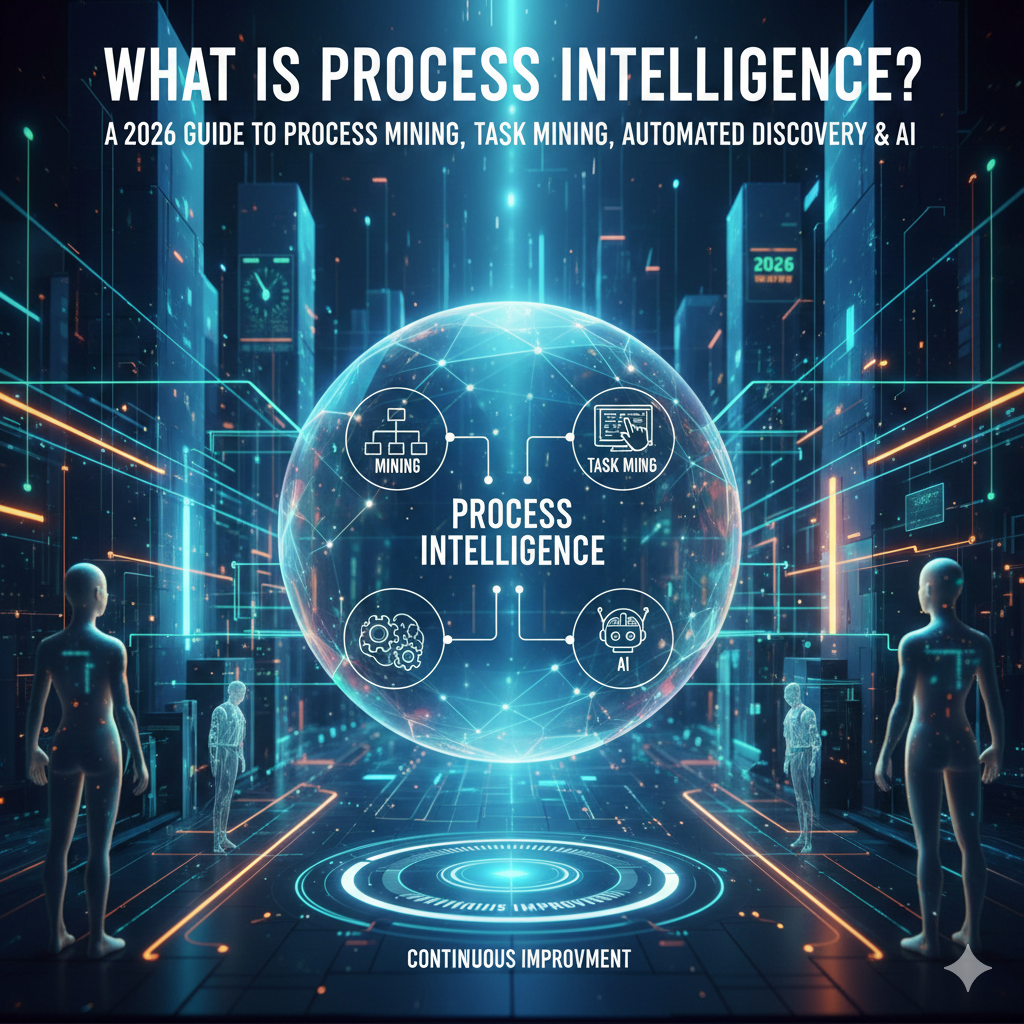
What Is Process Intelligence? A 2026 Guide to Process Mining, Task Mining, Automated Discovery & AI
Avery Brooks
December 12, 2025
In 2026, Process Intelligence is no longer a buzzword—it is the cornerstone of modern Process Excellence (PEX). As organizations grapple with the increasing complexity of digital transformation, process automation, and hybrid work models, they need more than just traditional tools like Lean or Six Sigma. Process Intelligence combines data from multiple sources, including system logs, human interactions, and artificial intelligence, to provide real-time, actionable insights into how work actually gets done.
This article breaks down what Process Intelligence is, how it works, and why it’s essential for any organization seeking to enhance its process management, reduce inefficiencies, and drive continuous improvement.
Process Intelligence refers to the data-driven approach to understanding, analyzing, and optimizing how work happens inside an organization. Unlike traditional Process Excellence methods, which rely on manual mapping, workshops, and anecdotal evidence, Process Intelligence offers a real-time, data-backed view of an organization’s processes. By merging process mining, task mining, AI-driven insights, and automated discovery, organizations can now identify bottlenecks, inefficiencies, and automation opportunities faster and more accurately.
In 2026, Process Intelligence is an essential tool for digital transformation and operational excellence.
Process Intelligence is made up of four key components, each offering unique insights and value:
What It Is:
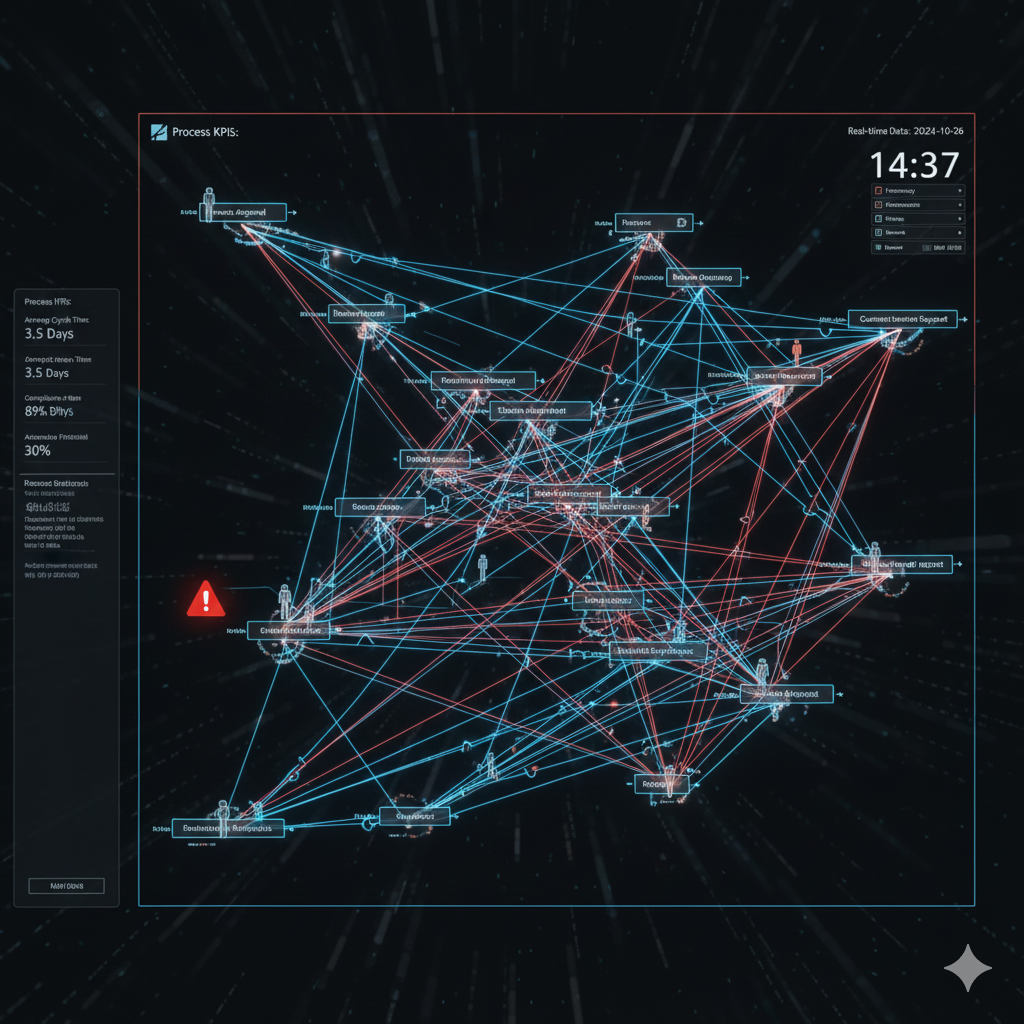
Process mining extracts event logs from enterprise systems (such as SAP, Oracle, Salesforce) to reconstruct workflows and provide insights into process efficiency and compliance.
What It Reveals:
Strengths:
Limitations:
Best Use Cases:
What It Is:
Task mining records user interactions within applications—such as clicks, keystrokes, and navigation paths—to provide a granular view of how employees complete their tasks.
What It Reveals:
Strengths:
Limitations:
Best Use Cases:
.jpg)
What It Is:
Automated process discovery leverages AI to analyze documents, conduct AI interviews, and analyze qualitative data to generate complete process maps, workflows, user stories, requirements and insights. It doesn’t just show what’s happening but provides context, such as decision-making logic, business rules, and exceptions.
What It Adds:
Strengths:
Limitations:
Best Use Cases:
What It Is:
The AI layer in Process Intelligence uses machine learning algorithms to analyze the captured process data and provide actionable insights, predictions, and recommendations for optimization.
What It Adds:
Strengths:
Limitations:
Best Use Cases:
Traditional discovery methods require weeks of workshops, interviews, and data collection. Process Intelligence automates this, saving organizations valuable time and resources. Teams can now get accurate process maps and requirements in hours, not weeks.
Before automating, organizations need a clear and accurate understanding of their processes. Process Intelligence ensures that automation is based on real data, not assumptions, reducing the risk of automation failure.
Process Intelligence isn’t just about mapping processes once. It enables continuous monitoring, ensuring that processes stay aligned with business goals, performance standards, and compliance regulations. Organizations can now proactively optimize as processes evolve in real time.
Process Intelligence bridges the gap between business, IT, and automation teams. By providing a unified view of processes, all stakeholders—from C-suite to operations teams—are aligned and equipped to make informed decisions based on data.
In today’s world of complex regulatory environments, real-time visibility into processes is critical. Process Intelligence provides continuous oversight, helping organizations stay compliant and avoid costly fines or process inefficiencies.
In a world where ERP migrations are complex and time-consuming, Process Intelligence accelerates discovery and ensures accurate requirements, minimizing rework.
By providing clear, data-backed insights into where automation is needed, Process Intelligence ensures organizations can scale their RPA initiatives more effectively.
Process Intelligence helps companies continuously monitor their process performance, enabling them to identify and fix issues before they become costly problems.
Understand your current state—where does your organization stand in terms of process documentation and improvement?
Select the most critical processes that need to be optimized, automated, or transformed.
Choose the appropriate tools (Process Mining, Task Mining, Automated Discovery, AI) to gain comprehensive insights into the processes.
Use AI-driven insights to redesign processes, improve efficiencies, and continuously monitor performance.
In 2026, Process Intelligence is the new foundation of operational excellence. It enables organizations to understand their processes better, optimize workflows faster, and achieve continuous improvement with minimal manual effort. By leveraging Process Intelligence, companies can stay competitive, reduce inefficiencies, and drive long-term success in a rapidly evolving business landscape.
If your organization is looking to modernize its process management and leverage the power of Process Intelligence for faster, more accurate continuous improvement, explore how ClearWork can help you streamline your processes and drive transformation.
Process Intelligence is a data-driven approach to understanding and optimizing business processes. It combines insights from process mining, task mining, automated discovery, and AI to provide real-time visibility into how work actually gets done, enabling continuous improvement and smarter decision-making.
Traditional Process Excellence methods rely on manual mapping, interviews, and workshops, which can be slow, subjective, and prone to errors. In contrast, Process Intelligence automates discovery, uses data to uncover inefficiencies, and provides continuous monitoring and optimization—allowing for faster, more accurate improvements.
The primary benefits include faster process discovery, improved automation outcomes, continuous monitoring for real-time process optimization, and a unified, data-driven view of workflows that enhances governance, compliance, and alignment across teams.
Process Intelligence identifies where automation can have the greatest impact by providing a clear, data-backed view of processes and their inefficiencies. It ensures that automation is based on actual, reliable data, reducing the risk of failure and optimizing automation outcomes.
By 2027, Process Intelligence will likely evolve to include even more advanced AI capabilities, such as autonomous process optimization, predictive process management, and fully integrated AI-driven workflows. This will enable organizations to achieve self-healing processes that continuously improve without human intervention.
Process Intelligence is transforming how businesses approach process management in 2026. By integrating process mining, task mining, automated discovery, and AI, organizations can now gain real-time, comprehensive insights into how work actually gets done. This not only accelerates process improvement but also ensures continuous optimization, empowering companies to stay ahead of the competition and reduce inefficiencies.
Fourteen days, full access, no card required.
No credit card required.